


Please provide your contact information
so we can contact you later
Name
Phone / WeChat / Email
Remarks
Please provide your contact information
so we can contact you later
Name
Phone / WeChat / Email
Remarks


“Actual Use” or “Intent to Use”? How to Choose for U.S. Trademark Registration with Damai Intellectual Property!!
2023-08-29
All sellers know that,According to X platform user Stufflistings, the trademark for this XR headset has already appeared in the database, named “Samsung Glasses”.
Recently, an increasing number of sellers have also complained that the requirements for trademark registration and the rigor of trademark office examinations continue to increase, making the process vastly more difficult.
Today, I’ll share some practical tips for applying for trademarks in the United States. Feel free to save this post and take your time reading it!
1. How to Apply for a Trademark in the United States
There are four ways to apply for a US trademark, and applicants can choose different methods according to their own circumstances. The specific requirements are as follows:
1
ByActual useSubmit an application as the basis
When submitting the application,The trademark has been used in the United States.;
Trademark information is required in the United States and globally.The date on which commercial use actually commenced and related supporting evidence;
Based on the current review situation, the USPTO is very strict in its review of evidence used by Chinese applicants. It is recommended thatSubmit evidence of use for at least three goods or services in each category applied for.Otherwise, there is a risk of receiving an examination opinion!
2
ByIntent to UseSubmit an application as the basis
When submitting the application,The trademark has not yet actually been used in commerce in the United States,However, the applicant after the trademark application datehas a bona fide intention to use the trademark in commerce in the United States;
No evidence of use needs to be submitted at the time of application, butAfter the application passes the substantive examination, corresponding evidence of trademark use must be provided.Otherwise, it will be deemed as a waiver of the relevant application!
3
ByDomestic registrationSubmit an application as the basis
based onTrademark Registration Certificate in ChinaSubmit an application to the USPTO;
The trademark design and applicant information are requiredIdentical to the domestic registrationThe goods and services must be within the scope of protection of the domestic registration certificate;
Evidence of trademark use is not required.!
4
ByRight of prioritySubmit an application as the basis
atWithin the six-month priority periodSubmit an application to the USPTO based on a foreign application.
After the preliminary examination is approved, submit the registration certificate for the basic trademark. If the foreign basic trademark has not yet been approved for registration, evidence of use of the trademark must be provided.
Currently,Application for Actual UseandIntent-to-use applicationis the most commonly selected filing method.
What are the differences between these two application methods?Difference?their respective strengthsWhat is it? How should sellers choose?
Our editor will answer each question one by one. Please continue reading!
II. Difference Between Actual-Use Applications and Intent-to-Use Applications
Application for Actual Use
····
····
····
Actual useApplicable to cases where the trademark applied for has already been put into use in the United StatesProvide evidence of use and one date of use when submitting the application.
The application process takes about one year..
Intent-to-use application
····
····
····
Intent to useApplicable to cases where the trademark applied for is intended to be used in the U.S. market in the future but has not yet been put into useThe applicant may provide a statement of use and the date of first use before the trademark is published for opposition or after the trademark is approved, and must pay additional official and attorney’s fees.
The application process takes around 14-16 months..
The specific differences in the U.S. trademark registration process are as follows:
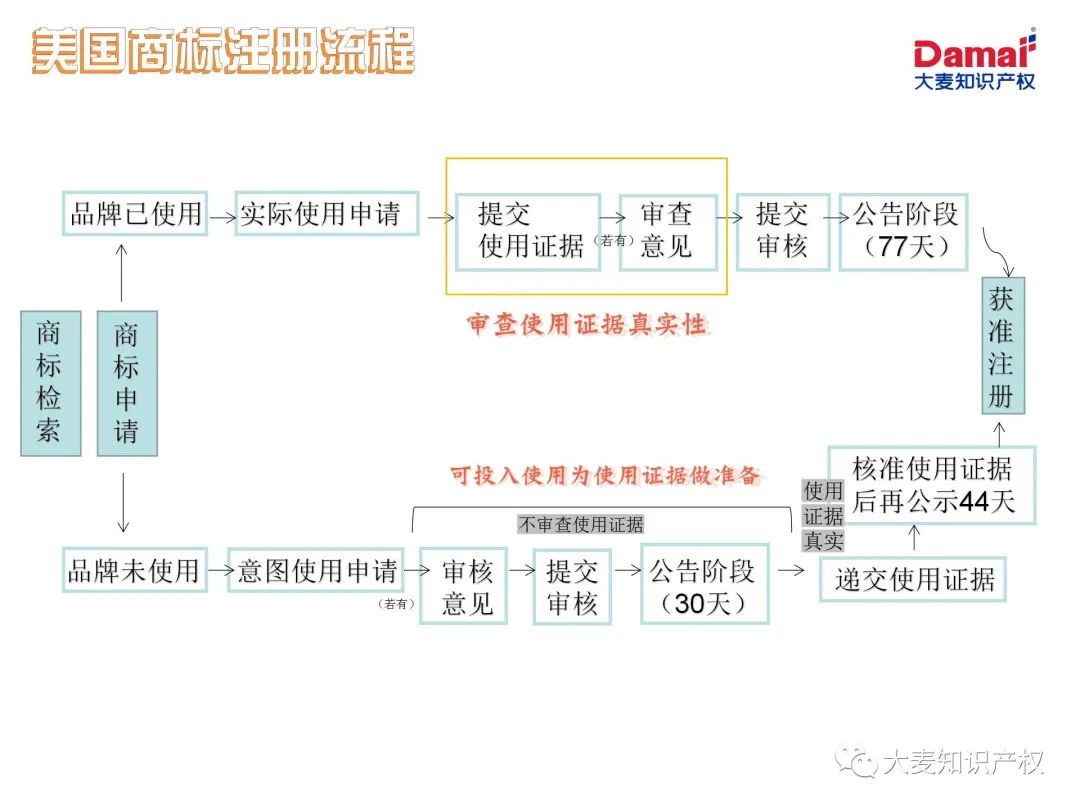
III. Comparative Advantages and Disadvantages of Actual-Use and Intended-Use Applications
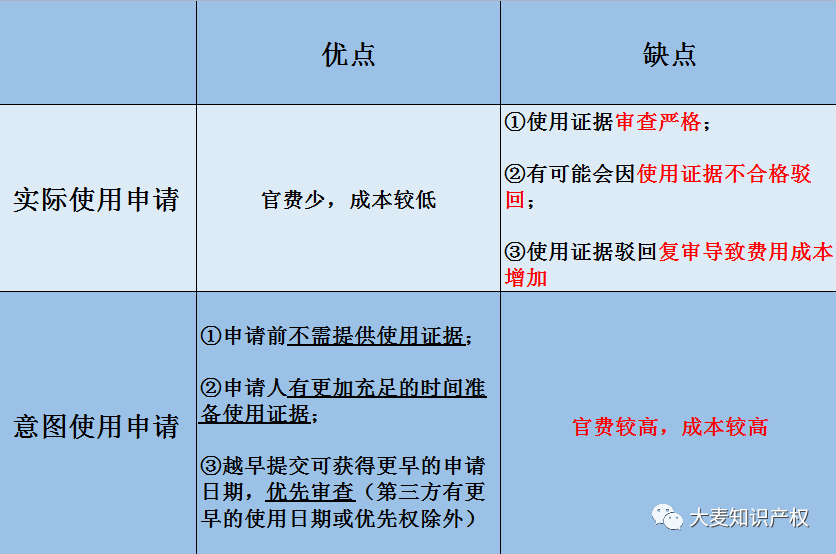
4. Which application method should the seller choose?
Each of the two application methods has its own advantages,An actual-use application involves lower costs but carries a higher risk of rejection, whereas an intent-to-use application involves higher costs but carries a lower risk of rejection.Sellers should choose based on their own circumstances!
However, it should be noted that, regardless of the basis on which an application for U.S. trademark registration is filed, evidence of use in the United States must eventually be submitted; the only difference is when it is required. Therefore, when using the trademark, be sure to collect and preserve evidence of its use in the United States in case it is needed.
5. How are U.S. trademarks maintained after registration?
Registering a US trademark is just the first step in entering the US market. To protect your trademark rights in the long term, you should pay attention to trademark maintenance afterwards.
Trademark post-registration maintenance mainly includesSubmit evidence of use, declarations, and renewal applications on a regular basis.
Submit evidence of use
US trademark law stipulates that evidence of use should be submitted to the USPTO between the 5th and 6th years after successful trademark registration, and every 10 years thereafter after registration.
Otherwise, the USPTO may require the party in default to pay a fine or cancel a registered trademark that has not been put into use.
Submit an affidavit
Article 8 of the US Trademark Law stipulates that between the 5th and 6th years after trademark registration, the trademark registrant must submit to the USPTO an affidavit signed by him/her, swearing that the registered trademark has been used on all approved trademarks and services within 5 years after registration.
Trademark Renewal
US trademark renewal is the same as in China, with a renewal every 10 years, and the validity period after renewal is also 10 years.
Renewal applications may be submitted from six months before the registration expires until six months after expiration (the grace period). A surcharge shall be payable if renewal is applied for within the six-month grace period after expiration.
Trademark registration is the first step in a company's brand strategy and a crucial prerequisite for effective brand protection.
If you have trademark registration needs or require more professional advice on US trademark registration, please consult Damai Intellectual Property!
Previous Article
Don’t know how to register a brand on TikTok? Don’t worry—Damai’s beginner-friendly, step-by-step guide to brand authorization and registration for TikTok Shop in the U.S. is here!
Next Article
Register a US trademark without prior use evidence, please apply for a 1B intention application!!!
Share to:

Scan the QR code to share via WeChat

